We fix the software you can’t afford to get wrong.
Two senior partners and a trusted team of developers — rescuing fast-growing codebases, shipping trust-critical payments, compliance and AI, and taking products from zero to one. We audit first, then fix what actually hurts.
Free 30-min teardown — you keep the report and insights whether or not we work together.



Depth where it counts.
Seven disciplines the partners have shipped in production — brought into your engagement only where the problem actually needs them.
AI
Product features and the automation behind them — evaluated, not hyped.
Web
Fast, accessible front-ends and the APIs that feed them.
Security
Payments, compliance and the trust-critical path.
High-scale
Databases and services that hold under real load.
Enterprise .NET
Long-lived C# systems, modernised without downtime.
Mobile
Native and cross-platform apps that actually ship.
Cloud
Infrastructure, pipelines and cost you can reason about.
AI that earns its place.
We build AI into products and automate the manual work behind them — grounded, evaluated, and shipped like the rest of your software. No hype, and no demo that falls over in production.
Build AI into your product
Copilots, retrieval and search, document & data pipelines, scoring and classification — wired into your stack with evaluation and guardrails, so you can trust the output.
Automate the work behind it
We map the manual workflows quietly eating your team’s week — support triage, data entry, reporting, QA — and automate the ones that are safe to hand over.
Begin with the lowest-risk step.
Codebase Health Audit
A dependency graph, a query-performance baseline, and the 20% of code causing 80% of the pain — in a report you can act on. No rebuild pitch.
Book the audit →US / EU Readiness Review
Payments, compliance and architecture gap analysis for expansion. The Benelux × US bridge, both directions.
Scope a review →Discovery → Build → Tend
Idea to paying customers in one cycle, then the retainer that outlasts the launch. A senior team inside your room.
Start a discovery →Proof, not adjectives.
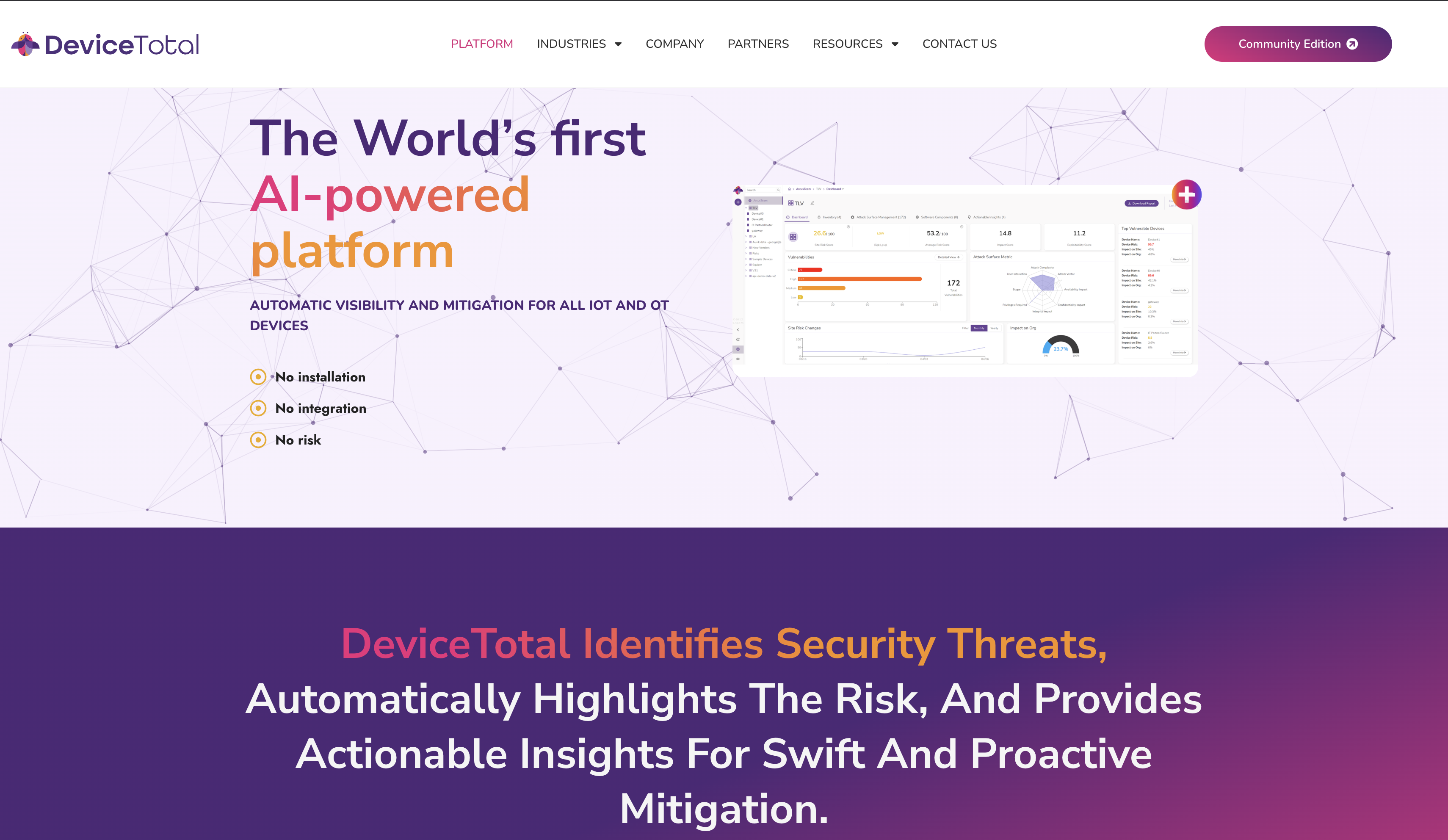
DeviceTotal
Cybersecurity · IoTRescued a mission-critical platform from its own technical debt — frontend rebuild, service-boundary separation, deep DB optimisation.

stor.ai
Retail · PaymentsOpened the US market with a compliant, multi-currency payment pipeline — processor-agnostic, fault-tolerant, card data out of scope.
What was done — and how.
Audit-first, measured, and shipped without drama. The problem, the conversation, the work, and the result — in full.
Rescuing a mission-critical platform from its own technical debt.
The challenge
The platform had grown fast to serve enterprise clients, but years of expedient decisions left a codebase where every new feature was a gamble. The React frontend was a tangle of ad-hoc components with no consistent data flow. The Node.js backend mixed business logic with infrastructure throughout. Most critically, the PostgreSQL database driving real-time device risk scoring was grinding under unindexed joins and redundant queries — threatening the SLAs they had committed to paying customers.
What we discussed
The hard constraint was never the code — it was that the platform served paying enterprise customers in real time. We couldn’t take it down, and a wrong risk score was worse than a slow one. So we agreed a rule before touching anything: measure first, change the smallest thing that moves the needle, prove zero regression, and only then repeat.
How we approached it
Audit — map before you move
A full dependency graph and query-performance baseline before touching a line. We flagged the 20% of code causing 80% of the slowdown.
Refactor — frontend architecture rebuild
A clear component hierarchy and shared state layer, eliminating prop-drilling and duplicated fetch logic spread across 40+ components.
Backend — service boundary separation
Disentangled the monolith into clear domains — auth, device ingestion, risk scoring, reporting — each independently testable and deployable.
The work
- —Dependency graph + query baseline across the codebase
- —Indexed and rewrote the hot-path queries
- —Component hierarchy + shared state on the frontend
- —Domain-separated backend services
- —Tests around the risk-scoring path
The outcome
Query performance
Critical queries from seconds to milliseconds after indexing and rewrite.
Feature velocity
Changes that took days now take hours.
Maintainability
New engineers contribute in days, not weeks.
Zero regressions
Shipped without downtime or data-integrity issues on live traffic.
Got a codebase that’s getting away from you like this?
Book a health audit →Opening the US market with a compliant, multi-currency payment pipeline.
The challenge
stor.ai had proven its grocery eCommerce platform with independent retailers, but expanding into the United States meant rebuilding the payment layer from the ground up. The existing pipeline assumed a single processor and a single currency. American retailers needed PCI-DSS-aligned processing, support for multiple US providers, and reconciliation that could survive partial failures without dropping a single transaction.
What we discussed
Payments are unforgiving — a dropped or double-charged transaction is lost trust, not a bug ticket. The real debate was build-vs-buy per processor. We chose an abstraction so stor.ai is never locked to one provider, and pushed card data entirely out of scope, so even a breach couldn’t reach it.
How we approached it
Discover — compliance-first design
Mapped PCI-DSS scope and US processor requirements up front, so sensitive card data never touched stor.ai’s own servers.
Build — processor-agnostic pipeline
An abstraction over multiple US providers with a unified interface — adding a processor became a config change, not a rewrite.
Harden — resilient reconciliation
Idempotent retries, webhook reconciliation and multi-currency settlement, so no transaction is ever lost or double-charged on failure.
The work
- —PCI-DSS scoping + processor requirements mapped first
- —Processor-agnostic abstraction with a unified interface
- —Idempotent retries + webhook reconciliation
- —Multi-currency settlement
- —Reworked into micro-services with the DB as single source of truth
The outcome
US market launch
Retailers onboarded with zero payment friction across multiple processors.
PCI-DSS alignment
Card data fully out of scope — never persists on stor.ai infrastructure.
Micro-services
Independently testable and deployable; calculation correct across repositories.
Fault tolerance
Idempotent flows mean partial failures self-heal without manual work.
Taking payments — or your product — into the US or EU?
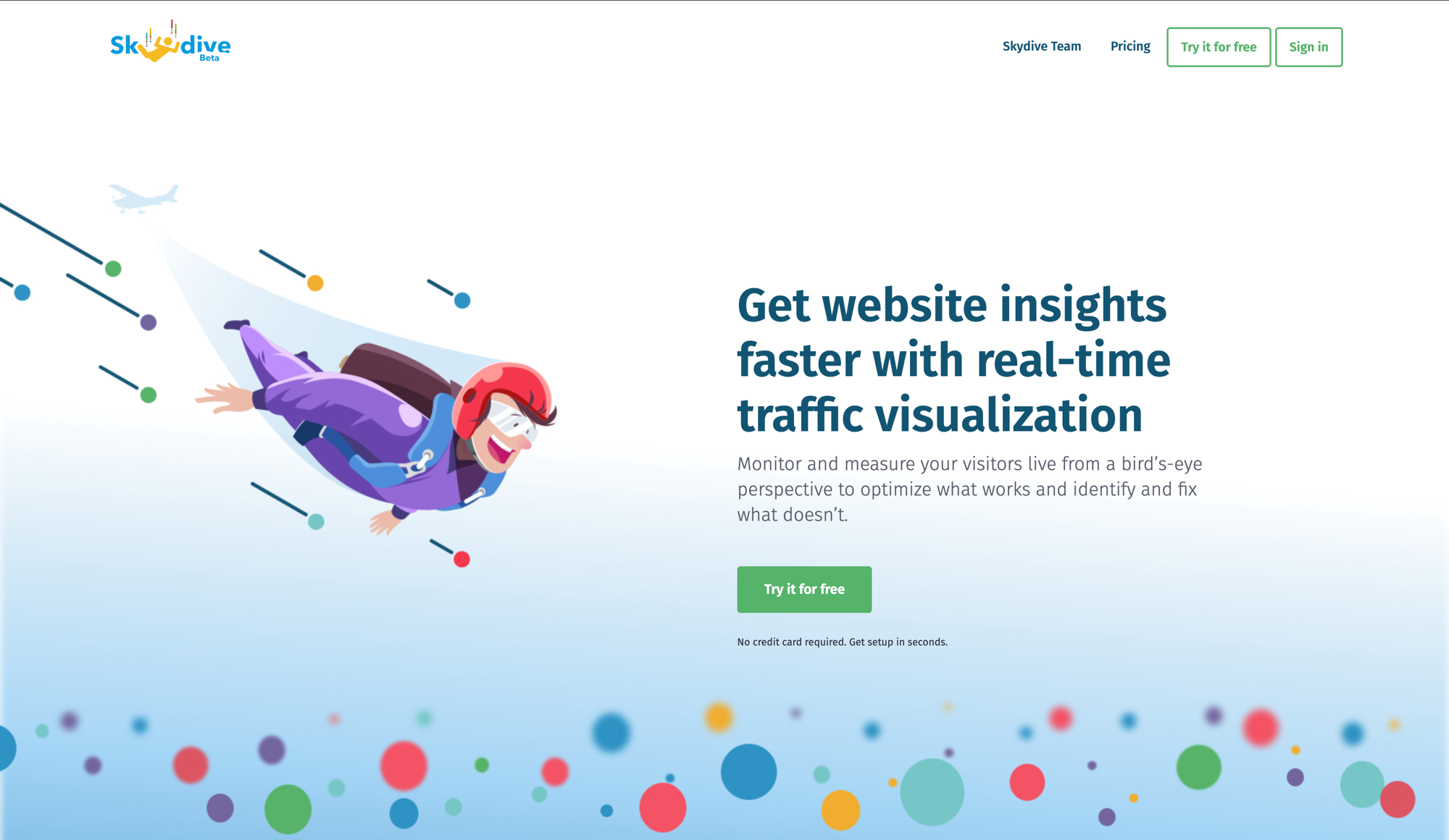
Scope a readiness review →Real-time website traffic, seen from a bird’s-eye view.
Partnered from the first sketch to build Skydive — the live ingestion pipeline, the real-time visitor model, and the visualization that lets a team watch traffic as it happens, see what’s working, and fix what isn’t. Idea to a beta customers could sign up for and use.
beta customers use
From concept to paying customers in a single cycle.
Partnered from the earliest concept stage — shaping the product architecture, designing the real-time collaboration layer, and delivering a production-ready platform that took the team from idea to paying customers in one development cycle.
in one cycle
Senior partners. A trusted team.
Two senior partners lead every engagement and stay accountable for it — backed by a small, vetted team of developers we bring in by need. Boutique judgment, with the capacity to ship.

Volodymyr
Turns fragile ideas into agreements you can stand behind — security, governance, and the human cost of both.

Conrad
Builds interfaces that feel inevitable: quiet typography, honest motion, and room for the relationship to grow.
Behind them, senior developers across .NET / C#, Node / React, Python / AI and mobile — assembled to fit your problem, never a body-shop.
no hand-offs to juniors
“Easy to communicate — they explained the issues, the potential problems, and what was better to focus on.”
“It felt less like a handoff and more like having a careful partner inside the room.”
“They brought our security, product, and design concerns into one clear path.”
We invest not in projects, but in relationships that outlast the roadmap.
Prefer email? hello@itellier.com